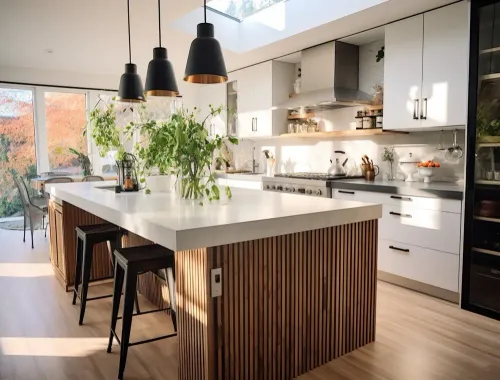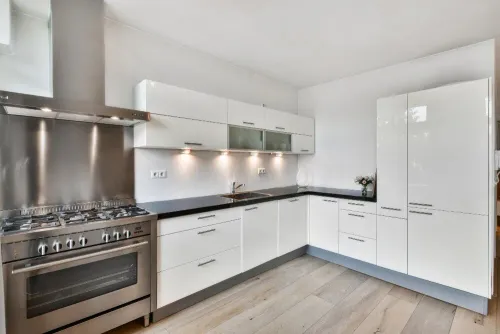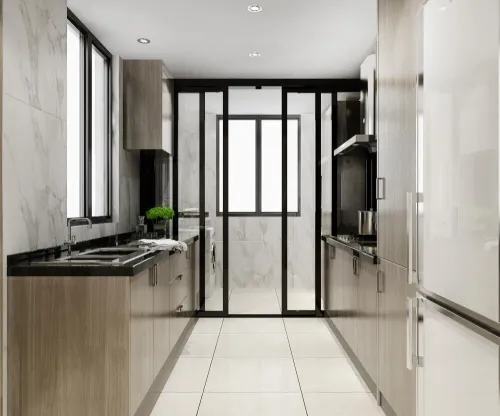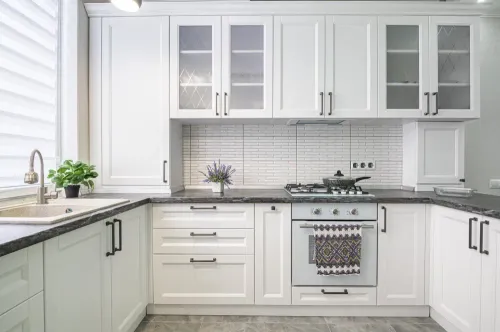
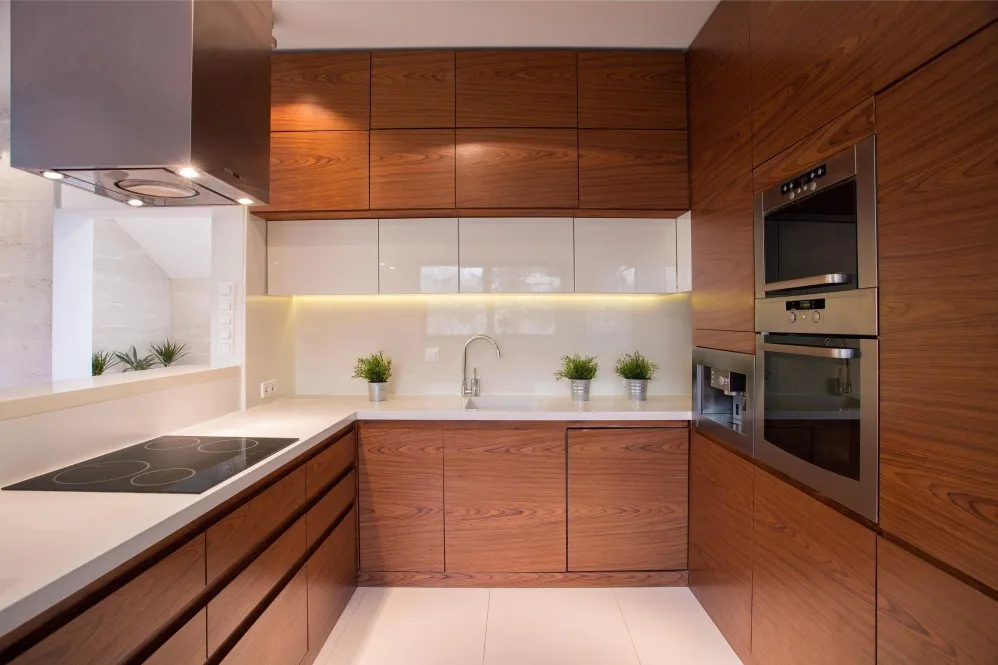
Wood finishes bring warmth, texture, and a sense of permanence to kitchen interiors. They work across classic, contemporary, Scandinavian, and transitional design styles. However, “wooden kitchen” can describe several very different materials and construction methods.
Anyone planning a wooden modular kitchen in Pune should compare solid wood, veneer, wood-finish laminates, and engineered substrates before deciding.
Solid Wood
Solid wood offers natural variation and can be shaped into framed shutters, mouldings, and detailed profiles. It is often chosen for traditional or premium interiors.
Its advantages include natural character, repair potential, and the ability to create crafted details. At the same time, wood responds to environmental conditions. Appropriate seasoning, construction methods, finishing, and maintenance are essential.
Solid wood may be used selectively for shutters, trims, or visible details rather than for every internal cabinet component.
Natural Veneer
Veneer is a thin layer of natural wood applied over a stable substrate. It provides authentic grain while allowing greater consistency in modular construction.
Because every tree is different, veneer sheets show natural variations. This is part of their appeal, but sheets should be carefully matched across adjoining shutters.
Veneer usually needs an appropriate protective coating. Buyers should ask how the surface will be finished and maintained, particularly near cooking and washing zones.
Wood-Finish Laminates
Laminates can reproduce wood tones and grain patterns without requiring the same maintenance as natural wood. They are available in a wide range of colours, textures, and price levels.
Wood-finish laminates suit busy households that want a warm appearance with straightforward cleaning. They can be used across internal and external surfaces, depending on the specification.
Quality varies, so samples should be evaluated for texture, print realism, surface durability, and edge matching.
Engineered Boards With Wood Finishes
Modular cabinets may use plywood or other engineered boards beneath a decorative surface. The core and finish should be treated as separate specifications.
For example, a shutter can have a wood-look exterior while the cabinet carcass uses a material selected for structural and moisture requirements.
Ask for a written schedule identifying the material used in:
- Base cabinets
- Wall cabinets
- Sink units
- Tall units
- Shutters
- Shelves
- Drawer components
- Back panels
This avoids misunderstandings created by a single broad description.
Consider Pune’s Seasonal Conditions
During the monsoon, humidity and dampness can affect inadequately protected materials. Cabinets should not be installed against unresolved seepage or wet walls.
Edge sealing, surface finishing, ventilation, and sink-area detailing need attention. Solid wood components require particularly careful selection and finishing to manage natural movement.
Direct sunlight can also change the appearance of some natural materials over time. Window orientation should therefore be considered when choosing tones and finishes.
Match the Look to Maintenance Expectations
Natural wood and veneer offer depth that printed surfaces may not fully replicate, but they can require more attentive care. Laminates provide convenience and consistency, though they create a different tactile experience.
A useful decision is based on three questions:
- How important is natural material authenticity?
- How much routine maintenance is acceptable?
- Which parts of the kitchen experience the most moisture and heat?
Kibo World offers custom kitchen manufacturing for Pune homes, enabling clients to combine materials instead of treating wood as a single all-or-nothing choice. A kitchen might use durable internal cabinets, natural veneer feature shutters, and easy-clean finishes near active cooking areas.
The best wooden kitchen is not simply the one with the most natural wood. It is the one in which every material is selected for its location, purpose, and expected level of use.
Keywords