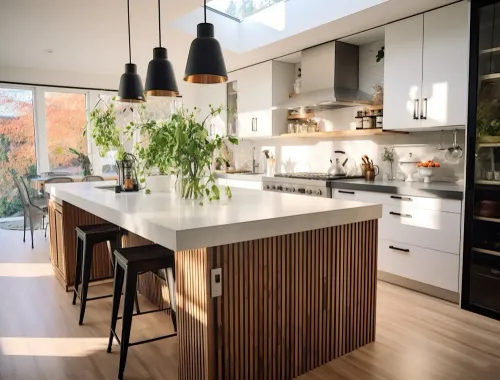

Loose furniture is not the same as a modular kitchen, fixed cabinetry or a carpenter-built item assembled without a complete specification. By separating these categories, defining the construction details and preparing the right project information, you can choose a manufacturer and approve furniture that fits the room, survives daily use and can be delivered without avoidable site problems.
Key takeaways
- Measure lift, stair, doorway and turning clearances before approving designs.
- Compare plywood grade, edge treatment, joinery, hardware and finish samples.
- Put dimensions, materials, quantities, timelines, installation and exclusions in writing.
- Choose a partner experienced with your role, drawings and site coordination needs.
What counts as loose furniture in a home?
Loose furniture is a standalone item you can move, replace or repair without dismantling the room. It may arrive fully assembled or as knock-down sections, depending on stair width, lift dimensions, door clearances and turning space. This distinguishes it from fixed residential furniture, which is anchored to walls, floors or services.
A loose furniture manufacturer in Pune can also design pieces in sections when a rigid wardrobe or bed will not pass through the home.
| Product type | What defines it | Delivery and installation |
|---|---|---|
| Modular kitchen | Repeatable cabinet boxes assembled around counters, appliances and plumbing | Installed on site and measured closely to walls |
| Built-in furniture | Designed for a specific recess or wall and secured in position | Removal can leave fixings or require patching |
| Loose furniture | Freestanding, movable and independently finished | Delivered assembled or assembled inside the home |
Custom loose furniture can cover:
- Sofas and beds, including upholstered headboards
- Dining tables and chairs
- Coffee tables and side tables
- Sideboards and consoles
- Freestanding TV units
- Freestanding wardrobes and storage cabinets
A TV unit or wardrobe counts as loose furniture only when it remains freestanding; wall-fixed cabinetry belongs to the built-in category. This distinction affects transport planning, joint strength, installation time and how easily you can relocate the piece later.
How do you commission custom loose furniture from a manufacturer?
Start with a written brief, then move through measurement, drawings, selection, pricing, approval, fabrication and installation. This custom furniture process works for one item or a complete set of made-to-order furniture.
1. Submit room dimensions, photographs, a floor plan, preferred furniture types, target sizes, intended use, budget range and required date. Add reference images, upholstery preferences, storage needs, appliance dimensions and any drawings from your architect or interior designer.
2. Arrange furniture site measurement after flooring, wall tiles and countertops are complete. Record wall-to-wall dimensions, ceiling height, floor slopes, out-of-square corners, door clearances, stair width, lift dimensions and turning radii.
3. Review custom furniture drawings showing plan, elevation, sections, dimensions, materials, hardware and opening directions. Ask for revisions before materials are ordered.
4. Select the board or wood species, thickness, upholstery, foam, hardware, veneer or laminate, edge treatment, paint and protective finish. Request physical samples because screens misrepresent colour and sheen.
5. Approve a quotation that separates dimensions, materials, finish, installation, delivery date, payment stages, warranty, exclusions and site-variation charges. Confirm whether transport, wall fixing, electrical work, plumbing, civil work and appliance coordination are included.
6. Sign off the drawings, samples and quotation before fabrication begins. The manufacturer then builds the furniture and shares a delivery schedule.
7. Confirm access again before dispatch. Large wardrobes, beds or sofas may need sectional construction or assembly inside the home.
At installation, inspect dimensions, finish, hardware operation and damage before signing completion. Record defects in writing with agreed rectification dates.
Which construction and material details determine durability?
Furniture construction quality is visible in what the finish sample cannot show: the frame, joints, support system and serviceable edges. Ask for the substrate specification and replacement-panel route, not only a colour chip.
- Frame: use kiln-dried timber or supported board; load-bearing joints must not rack.
- Joinery: tight dowels, screws, biscuits or mortise-and-tenon beat glue-only joints.
- Sofas: compare foam density for sofas, then test recovery after sitting; softness alone predicts little.
- Webbing and springs: check anchoring, spacing and squeaks; choose removable upholstery for service.
- Hardware and edges: test runners, hinges and connectors; seal exposed cuts against moisture.
- Finishes: confirm topcoat, sheen, colour tolerance and cleaning method; a sample proves appearance, not durability.
| Material | Maintenance | Repair trade-off |
|---|---|---|
| Engineered wood | Keep edges dry; seal sink cuts. | Consistent; damaged panels are replaceable. |
| Solid wood | Wipe spills; renew coating. | Refinishable, but can move or crack. |
| Veneer | Protect from water and heat. | Repairable; matching grain is difficult. |
| Laminate | Use mild detergent; protect edges. | Tough surface; chips require a new panel. |
| Acrylic | Avoid abrasives; wipe marks. | Light scratches polish; deep damage needs replacement. |
| PU finish | Clean gently; avoid solvents. | Repaintable; colour and sheen may vary. |
| Natural stone | Seal it; remove acids promptly. | Chips can be filled; cracks are costly to match. |
The solid wood versus engineered wood decision is therefore about repair and movement, not a simple quality ranking. Veneer laminate acrylic PU finish choices also depend on whether you prioritise easy cleaning, visual uniformity or local repair.
Which furniture partner fits a homeowner, architect or interior designer?
Choose a custom manufacturer when the piece must match a measured room, approved finish or project schedule; choose a retailer when speed, fixed pricing and showroom inspection matter more than exact adaptation.
| Option | Strength | Trade-off |
|---|---|---|
| Custom furniture manufacturer | Tailored dimensions, materials and repeatable fabrication | Needs drawings, approvals and lead time |
| Ready-made retailer | Immediate selection and simpler purchase | Limited sizes, finishes and replacement options |
| Carpenter | Adapts closely to irregular walls and late changes | Quality, joinery and timelines depend on site skill |
| Turnkey interior contractor | Coordinates furniture with civil, electrical and other work | Furniture choices may follow the package rather than your brief |
| Factory-produced modular system | Consistent cabinet dimensions and faster assembly | Poor measurements and late changes create expensive mismatches |
For furniture for architects and interior designers, request a coordinated information set before fabrication:
- Dimensioned drawings and shop drawings for furniture, showing sections, joinery, hardware, clearances and service gaps
- Physical samples labelled with substrate, veneer or laminate, edge treatment, paint system, sheen and colour tolerance
- A finish schedule linking each code to every panel, upholstery, metal and stone component
- Delivery drawings confirming lift size, stair width, door clearances and whether large units arrive assembled or in sections
- A site coordinator, installation sequence, snagging process and furniture installation support Pune projects require
Kibo World is a relevant Pune-based option when you need residential or project furniture manufactured to approved drawings, with finish coordination and installation planning rather than a catalogue-only purchase.
What must the quotation and delivery plan specify?
Approve only a custom furniture quotation that matches the final drawings and states what happens before fabrication. Use this furniture contract checklist:
1. Confirm finished dimensions for every piece, including height, width, depth, clearances and sectional joints. Record the approved site measurements and identify walls, floors or ceilings that are out of square.
2. Name the substrate, timber or metal grade, veneer or laminate, edge treatment, foam density, upholstery fabric, hardware brand or specification, paint system, sheen and colour-matching tolerance. A finish sample alone does not define the product.
3. List inclusions and exclusions separately. State whether cushions, handles, mirrors, lighting, appliances, granite or quartz, sink, faucet, chimney, electrical work, plumbing, civil repairs, wall fixing and debris removal are included.
4. Write the payment stages against deliverables, such as design approval, material approval, fabrication, dispatch and installation. Add the promised delivery date, installation duration and the process for approving site variations, with their cost and schedule impact.
5. Define the furniture warranty: covered parts, duration, exclusions, service response and who pays for replacement hardware or damaged panels. Ask how matching veneer, laminate or upholstery will be sourced later.
6. Record the furniture delivery and installation route before production. Measure gate, door and lift openings, stair width, landings, turning radii and floor protection; confirm whether large items arrive assembled or in sections.
Do not approve vague terms such as “complete furniture package.” Both parties should sign the drawings, finish schedule, quotation, delivery plan and variation procedure.
Frequently asked questions
What counts as loose furniture in a home?
Loose furniture is a standalone item you can move, replace or repair without dismantling the room. Examples include sofas, beds, dining tables, chairs, freestanding storage and movable sideboards.
How do you commission custom loose furniture from a manufacturer?
Define the use, dimensions, quantity, finish and budget; share room measurements and access constraints; review drawings and samples; then approve a written quotation before production.
Which construction and material details determine durability?
Check the board or timber specification, thickness, joinery, edge treatment, hardware brand and load-bearing design. Inspect finish samples and confirm how exposed edges, moisture and repairs will be handled.
What must the quotation and delivery plan specify?
Require item dimensions, quantities, materials, finishes, hardware, taxes, transport, installation, payment stages, production deadline, delivery conditions, warranty and exclusions.